Burn Off Ovens
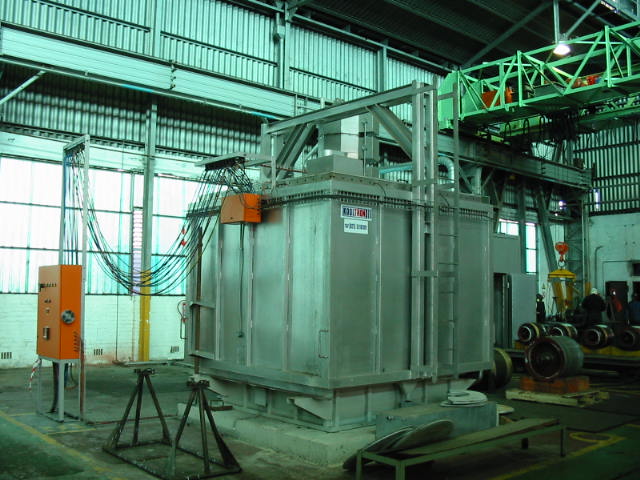
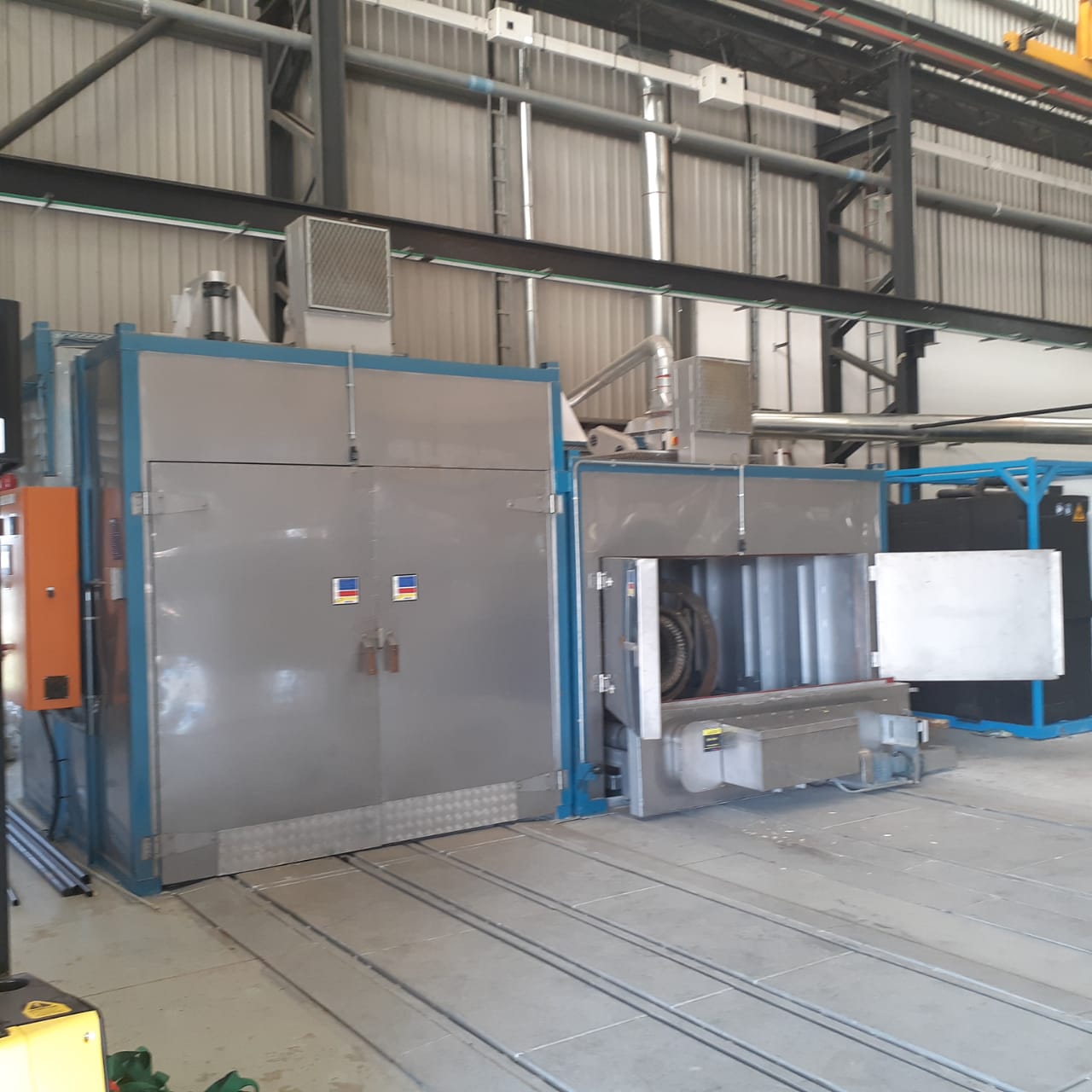
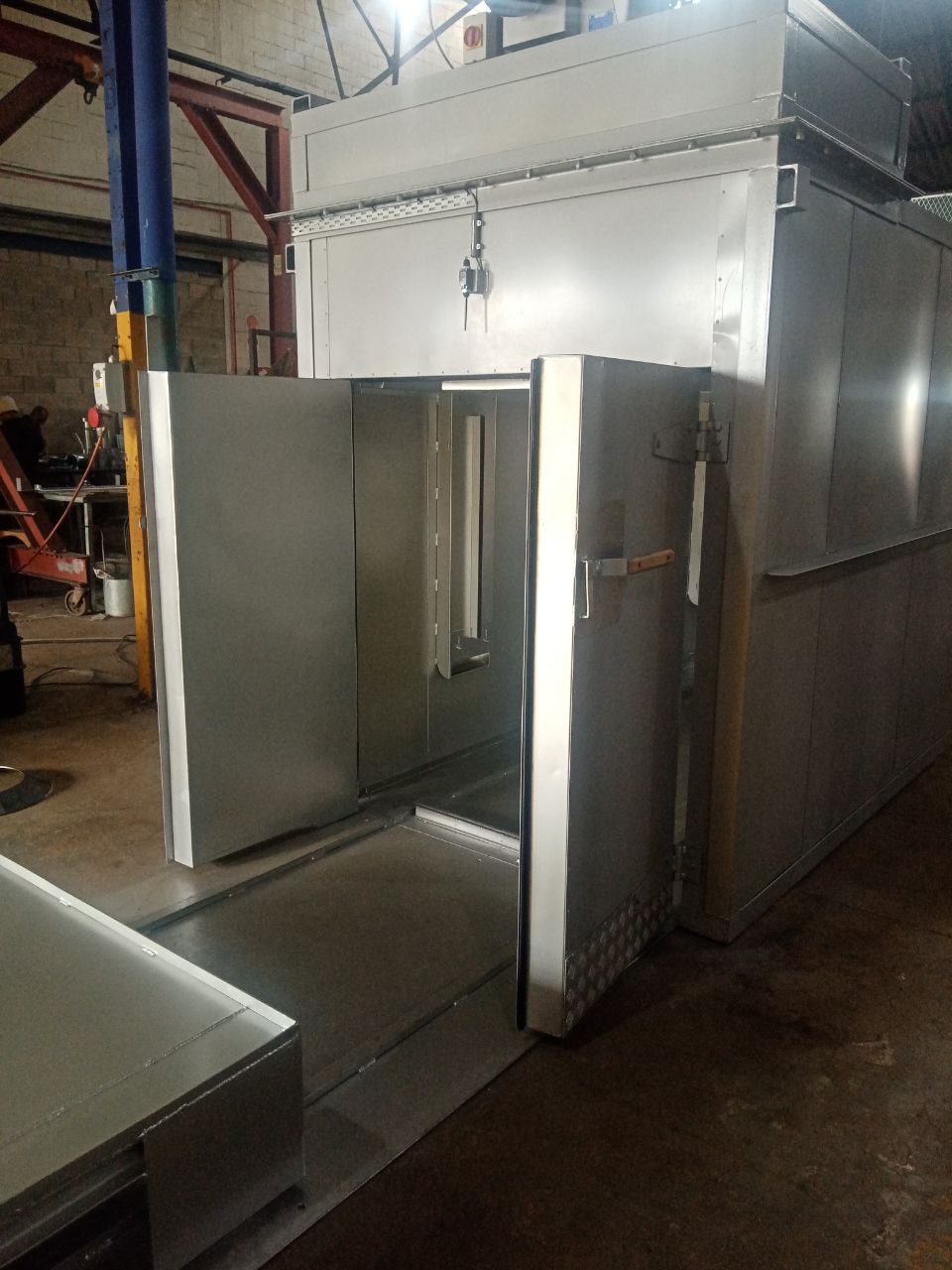
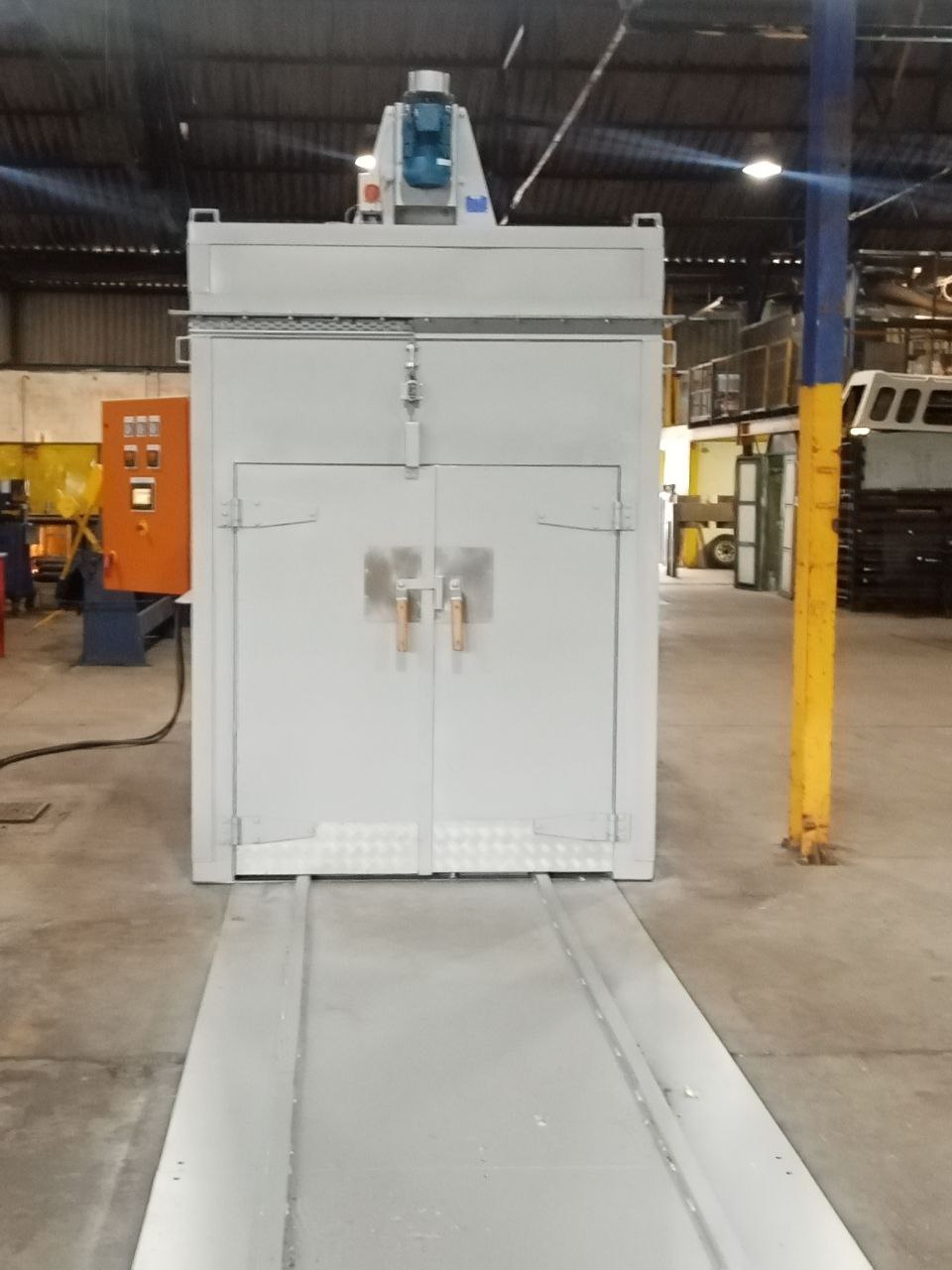
- The burn off oven can be in top hat form or a standard side entry oven with a single set of double doors. The oven can also be fitted with two sets of doors to provide a drive-through oven in order to assist with product loading and unloading ease.
- The standard form of the burn off oven is the same physical size as the curing oven, while the top hat option is 2100mm D x 2100mm W x 2100mm H. In the case of the top hat oven, there is a waterbed to keep the copper commutator of the traction motors below 80°C.
- The oven typically has a ramp type temperature controller that is programmed to automatically adjust the temperature over time. In the railway electric locomotive motor refurbishment example, this is particularly important as it ensures that the resin and epoxy is sufficiently degenerated for easy stripping.
- The oven has an after-burner that is typically set at 800°C, which clean burns away any smoke and smells that have been generated during the process. The after-burner has a dedicated temperature controller with a cut out setting for over temperature conditions.
- The temperature setting for the burn off oven is usually 450°C.
- The main temperature controller has a safety cut out over temperature setting. As with the curing oven there is a second temperature controller that is a dedicated over temperature controller. Special probes can be fitted to indicate the core temperature of the motor being processed.
- The burn off oven has a third temperature controller that will activate a water mist spray over any product in event of “thermal run-away conditions” occurring. This temperature controller has two settings:
- The first setting maintains temperature and power to the elements while pulsing the water mist sprayers to suppress any fire that has been detected by a rise in temperature.
- The second setting allows for power off and dousing for a full minute in event of a massive increase in temperature. The same setting will apply during a power failure to prevent fumes from entering the factory via the after burner. The latter setting is controlled via a UPS unit.
All ovens have circulating fans to ensure an even distribution of heat within the ovens. There is a sensor to detect if the belt drive of the circulating fan has failed.
Safety features of all ovens
- All ovens are fitted with a dedicated electrical control panel. The panel houses the emergency isolator, thermostats, contactors, overload protection and relays.
- The panel face allows the operator easy vision of all run or fail lights as well as temperature status.
- The ovens are fitted with blast panels. In the event of a blast, the explosion would vent into the workshop/factory in a safe manner without incurring damage to the oven or the building. The blast panel is fitted in the roof of the ovens to safely deflect any explosion without damaging the structure of the oven or injure the operator.
- The temperature controller that governs the electric heater elements has an over-temperature cut out.
- Should the doors be opened while the oven is in operation, limit switches mounted on the door will cut off the power supply to the oven.
Recording of temperatures
- A temperature recorder can be fitted within the electrical panel to provide a record of each cure or burn. This is so that specified temperature and time constraints can be validated.